Why Two Identical Used Cars Can Have Completely Different Futures
Limited Offer
Click the image below to apply the discount and continue to enter your REG plate.

One vehicle may provide years of reliable motoring with little more than routine servicing. The other could become a constant source of frustration, generating expensive repair bills and unexpected trips to the garage.
The question is why.
If the cars look so similar on paper, what causes their futures to diverge so dramatically?
The answer lies in the information that isn't immediately obvious.
When buying a used car, understanding a vehicle's future often requires looking beyond the headline details and digging deeper into its history, maintenance patterns, ownership story and model-specific risks.
The Problem With Comparing Used Cars at Surface Level
Most buyers naturally focus on a few key details when comparing vehicles:
Age
Mileage
MOT history
Service history
Asking price
These are all important factors, but they rarely tell the whole story.
Two vehicles with identical mileage can have been driven in completely different ways. One may have spent most of its life cruising on motorways, while the other may have endured years of stop-start urban driving.
Similarly, two vehicles with the same MOT history may have experienced very different levels of care and maintenance between tests.
What appears identical on paper often looks very different once you start examining the details more closely.
This is why experienced buyers rarely rely on a vehicle's headline statistics alone.
The Hidden Impact of Previous Ownership
Every vehicle tells a story.
Unfortunately, that story isn't always obvious when you're standing in a dealership forecourt or scrolling through online listings.
Consider two identical hatchbacks.
One owner may have serviced the vehicle religiously, addressed advisory notices immediately and fixed small problems before they became larger ones.
The other owner may have delayed servicing, ignored warning lights and only repaired faults when absolutely necessary.
Both cars could still pass their MOT tests.
Both could still have similar mileage.
Yet their long-term reliability may be completely different.
Ownership habits have a huge influence on how a vehicle ages, and those habits are often difficult to assess without reviewing multiple sources of information.
This is one reason why a comprehensive vehicle history check is such an important part of the buying process.
A report from TopCarCheck can help uncover details that aren't visible during a viewing, providing a broader picture of the vehicle's background before you commit to a purchase.
Mileage Only Tells Part of the Story
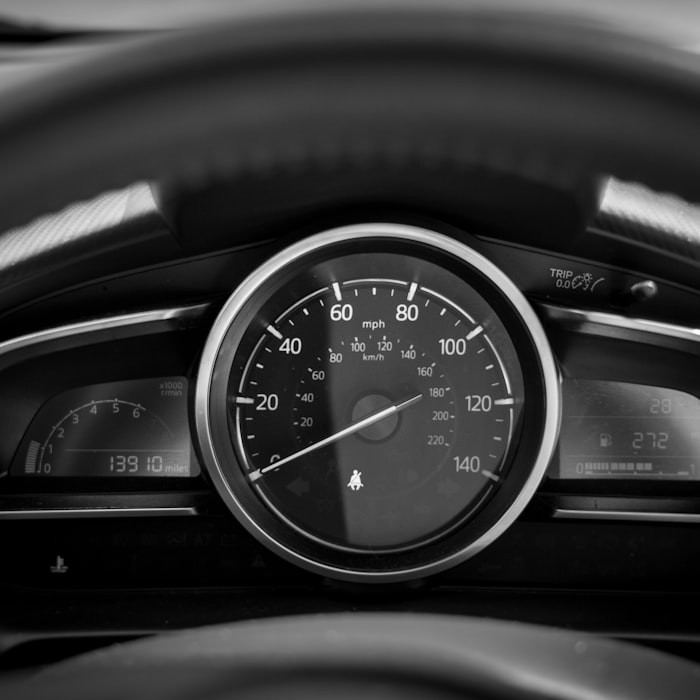
Mileage is often treated as one of the most important indicators of a used car's condition.
While mileage certainly matters, it's only part of the equation.
A well-maintained vehicle with 100,000 motorway miles may prove far more reliable than a poorly maintained example with half that mileage.
The type of driving matters.
The quality of maintenance matters.
The vehicle's overall history matters.
This is why experienced buyers use mileage as a starting point rather than a final judgement.
A lower odometer reading isn't always a guarantee of lower ownership costs.
Why MOT Histories Can Be Misleading
Many buyers assume that a clean MOT history automatically means a vehicle is a good purchase.
As we discussed in our article Why MOT History Alone Doesn't Tell the Full Story, MOT records provide valuable information but they only capture a vehicle's condition at specific points in time.
A vehicle may pass every MOT test and still develop expensive problems shortly afterwards.
Likewise, a vehicle with several previous failures may have been repaired properly and go on to provide years of dependable service.
The real value often lies in identifying patterns rather than focusing on individual results.
Recurring advisories, repeated maintenance concerns and unusual mileage trends can sometimes reveal far more than a simple pass or fail result.
Reliability Matters More Than Most Buyers Realise
One reason two seemingly identical vehicles can have very different futures is that not all models age equally.
Every make and model has strengths and weaknesses.
Some vehicles are known for:
Timing chain problems
Turbocharger failures
DPF issues
Gearbox faults
Electrical gremlins
Others have earned reputations for exceptional reliability.
The challenge for buyers is that these risks rarely appear in classified adverts.
A seller isn't likely to mention that a particular engine has a reputation for costly timing chain failures.
Nor will a basic vehicle listing explain which maintenance milestones are approaching.
Understanding model-specific reliability concerns can make a significant difference to your future ownership experience.
The Cost Difference Can Be Thousands of Pounds
The consequences of choosing the wrong vehicle can extend far beyond inconvenience.
Consider two identical used cars purchased for the same price.
One owner may spend the next three years paying for routine servicing, tyres and brakes.
The other may face:
Turbo replacement
Timing chain repairs
Clutch replacement
Suspension work
Electrical diagnostics
Over time, the difference in ownership costs can amount to thousands of pounds.
This is why the cheapest car isn't always the most affordable car.
Purchase price is only one part of the overall ownership equation.
Looking Beyond Historical Data
Vehicle history checks are incredibly useful because they help buyers uncover what has happened in the past.
However, historical records alone cannot predict everything that may happen in the future.
This is where buyers often struggle.
After receiving a vehicle history report, many people are left asking:
Is this model reliable?
What faults should I watch for?
Are there any expensive repairs commonly associated with this vehicle?
What should I inspect before buying?
These questions require context rather than raw data.
In our article What Happens After the Car Check? Turning Vehicle Data Into Better Buying Decisions, we explored how the best buyers use vehicle information as a starting point rather than a final answer.
The real goal isn't simply to gather information.
It's to understand what that information means.
How AI Is Helping Buyers See the Bigger Picture
This is one reason AI-enhanced vehicle checks are beginning to attract attention from used car buyers.
Traditional vehicle history reports are excellent at providing facts.
AI can help provide interpretation.
Rather than simply displaying vehicle records, AI can help identify:
Common faults associated with a particular model
Reliability considerations
Ownership cost factors
Maintenance concerns
Inspection priorities
This additional layer of context helps buyers move beyond historical data and towards a better understanding of the vehicle's likely future.
Our pillar guide, AI Enhanced Car History Checks: The Future of Buying a Used Car in the UK, explores how artificial intelligence is changing the way buyers research and evaluate used vehicles.
How to Compare Two Similar Used Cars More Effectively
If you're choosing between two similar vehicles, don't focus solely on the obvious details.
Instead, consider:
Vehicle History
Check for:
Outstanding finance
Insurance write-off records
Stolen vehicle markers
Mileage discrepancies
MOT Patterns
Look for recurring advisories and maintenance trends rather than individual results.
Reliability Research
Investigate common faults associated with the make, model and engine.
Ownership Story
Consider how previous owners may have maintained and used the vehicle.
Future Costs
Think about upcoming maintenance requirements rather than just the purchase price.
The more complete the picture, the better your decision is likely to be.
Final Thoughts
Two used cars may look identical today.
They may share the same age, mileage and MOT history. They may even be parked next to each other on the same forecourt.
Yet their futures can be completely different.
The difference often comes down to factors that aren't immediately visible: ownership habits, maintenance standards, model-specific reliability concerns and the hidden details contained within vehicle history data.
The smartest buyers understand that purchasing a used car isn't simply about comparing what's visible today.
It's about understanding what those details could mean tomorrow.
By combining vehicle history checks, reliability research, MOT analysis and AI-powered insights, buyers can make more informed decisions and reduce the risk of expensive surprises after purchase.
Continue Your Research
Learn How AI Is Changing Vehicle Checks
AI Enhanced Car History Checks: The Future of Buying a Used Car in the UK
Learn Why MOT Records Have Limits
Why MOT History Alone Doesn't Tell the Full Story
Learn How to Interpret Vehicle Reports
What Happens After the Car Check? Turning Vehicle Data Into Better Buying Decisions
Run a Vehicle History Check
Limited Offer
Click the image below to apply the discount and continue to enter your REG plate.
Enter Registration Number
Enter a UK vehicle registration to start your check
Secure checkout via Stripe